
A sewer line’s condition may decline long before it shows any obvious signs. Water flow may continue, the drain may function well, and things may appear fine on the surface. In reality, however, cracks, roots, buildup, or wear may already be present at the joints.
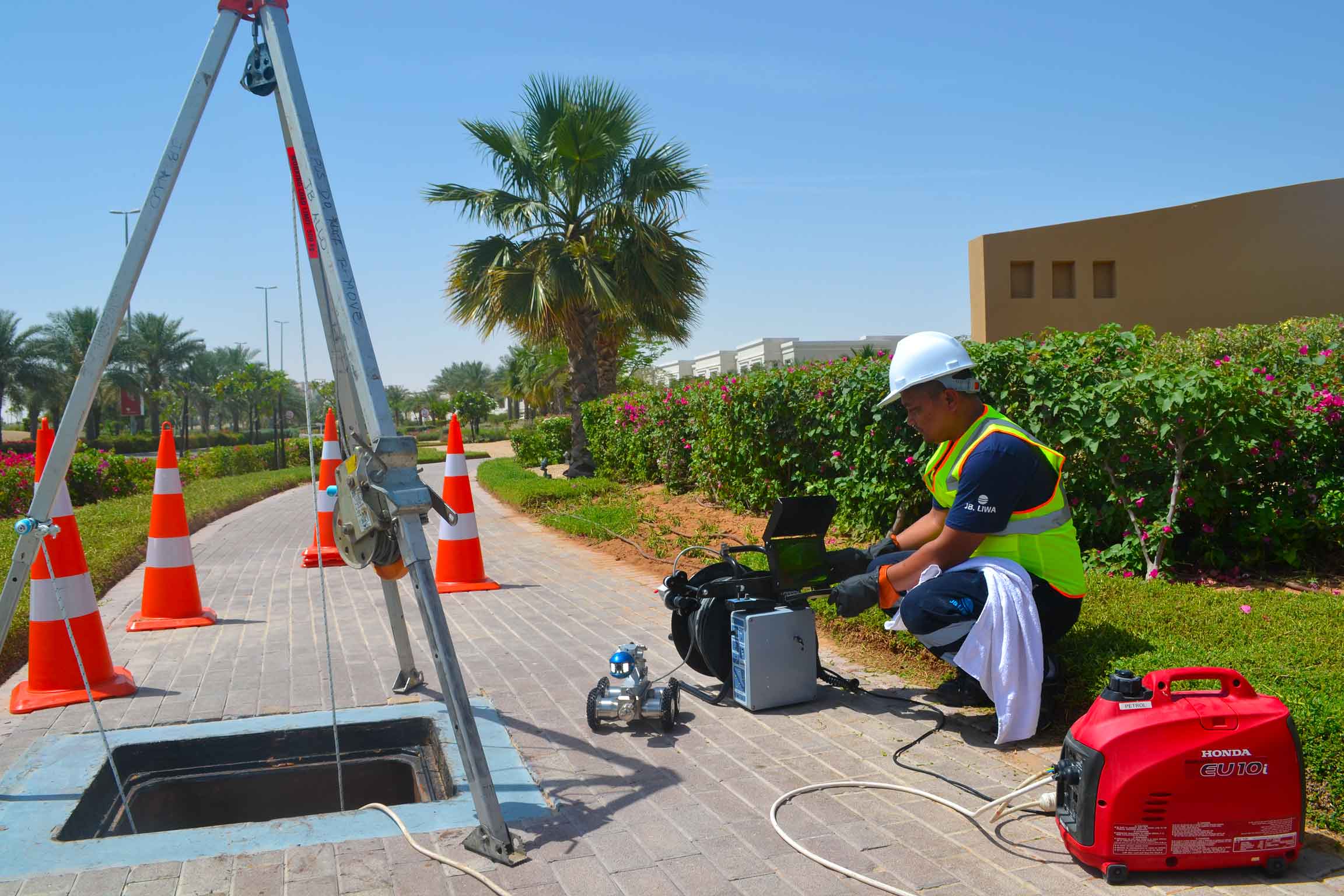
This is where a CCTV Drain Surveying Service in Dubai becomes useful. Instead of guessing what is happening underground, a camera can travel through the pipeline and provide a clear view of its internal condition. Early inspection can help identify small problems before they turn into blockages, leaks, or expensive repair work.
What Can a CCTV Sewer Survey Detect?
Booking a drain camera survey gives technicians a front-row view of pipe sections that are impossible to inspect from above ground. It works great for basic residential drains as well as massive commercial sewer lines. Depending on your setup, a camera check can expose all kinds of hidden defects before they destroy your plumbing.
Here are seven classic sewer problems a camera survey spots right away.
1. Cracked or Broken Pipelines
Cracks in pipes could be caused by aging, movement of the soil, weight applied to the pipeline, and normal deterioration. Even though a small crack might not lead to immediate failure of the drainage system, it is still easy to overlook.
A CCTV drainage survey will reveal these defects. Early detection lets the property owner assess the situation before the crack worsens or starts affecting surrounding areas.
2. Tree Root Entry
Tree roots tend to seek out moisture, and any little crack in the sewer line could attract the tree roots. Roots will enter the pipe, continue growing, and eventually lead to more restrictions.
The camera survey will show where the root entered and how far it has affected the pipe.
3. Grease and Solid Deposits
Grease, sludge, sediments, and other deposits tend to accumulate within pipes. The decreased flow may not be obvious in the initial phase, but eventually, the deposit can accumulate to such an extent that it causes a severe clog.
A CCTV survey for sewer lines in Dubai will provide the needed information regarding the extent of the deposits and the condition of the pipe. This information can also be useful in determining if there is a need for cleaning and the appropriate technique to use.
4. Misaligned or Damaged Pipe Joints
The sewer pipes require proper connection between the joints in order to ensure flow continuity. When the joints get misaligned or damaged, gaps and improper joints can form in the interior parts of the line.
This kind of problem is not always easy to notice from the outside. With CCTV drainage inspections, it becomes possible for the technicians to see the joint and assess if it requires repair before any problems occur.
5. Collapsed or Deformed Pipe Sections
When pipes are crushed or heavily eroded, they can sag, bulge, or deform, leaving little space for sewage to flow. In such cases, you will have poor drainage, blockages, and even a situation where the pipes completely break down.
The inspection camera helps to identify the exact spot where the pipes are damaged, and you don’t have to dig up your whole garden trying to find it out. You are shown the exact spot and the nature of the damage.
6. Concealed Obstructions
You think you know why the toilet is blocked because of what was recently flushed down, but in fact it could be blocked by an obstruction far deeper in the pipe, perhaps 30 feet away.
Using a drain camera is very effective for tracing the actual route of the pipe right up to where the problem occurs. The drain camera will assist in determining whether there is any foreign object that may have found its way into your drain pipes, or if there are sludge buildups, roots, or collapsed pipes blocking the flow of water in the pipe.
7. Early Signs of Future Drainage Problems
A drainage problem doesn’t have to be major to require inspection. CCTV can detect minor issues, build-up, and even changes in the system that might lead to future problems.
This is why a CCTV survey for sewer lines in Dubai is useful not just in emergencies but also for preventative maintenance.
When Should You Get a CCTV Sewer Survey?
You may not need to wait for wastewater to overflow before inspecting a sewer line. The survey may be required in cases where one observes issues such as slow drainage, frequent blocking, foul smell, or any change in the performance of the drainage system.
Such a survey may also be required before acquiring any property or even for the maintenance of a large drainage network. CCTV Drain Surveying Service in Dubai will help in identifying what is occurring in the pipes without the need for excavation.
Get Professional CCTV Drain Surveying From JB Allo Sewage
At JB Allo Sewage, we make use of state-of-the-art CCTV drain surveying equipment for an unambiguous inspection of the drainage systems without any excessive digging. We offer HD pipe inspection images and reports for the identification of any blockages, cracks, root entry, and structural problems. Our CCTV equipment is capable of performing surveys on pipe diameters from 80 mm to 4,000 mm in size. With our experience of 25+ years in the field, we have completed 3,500+ jobs, and we also offer pipe jetting services, sewage pump station pumping, and pipe plugging.
FAQs
1. What can a CCTV sewer survey find out?
They can detect cracks, root penetration, blockages, damaged joints, sedimentation, collapsed areas, and many other internal defects of pipes.
2. Under what circumstances should I go for a CCTV drain survey?
You should go for it if you keep experiencing clogs, slow draining, foul smell, are acquiring a new house, or have any other drainage mystery.
3. Can CCTV inspection reveal hidden clogs in the sewers?
Yes, they will be able to see clogs caused by any kind of waste, roots, objects, sediments, or even broken pipes.
4. Does CCTV drain surveying require excavation?
No, CCTV equipment examines the pipeline internally, helping locate problems without unnecessary excavation across the surrounding area.
5. What pipe sizes can JB Allo Sewage inspect?
JB Allo Sewage can inspect pipelines ranging from 80 mm to 4,000 mm using suitable CCTV inspection systems.